
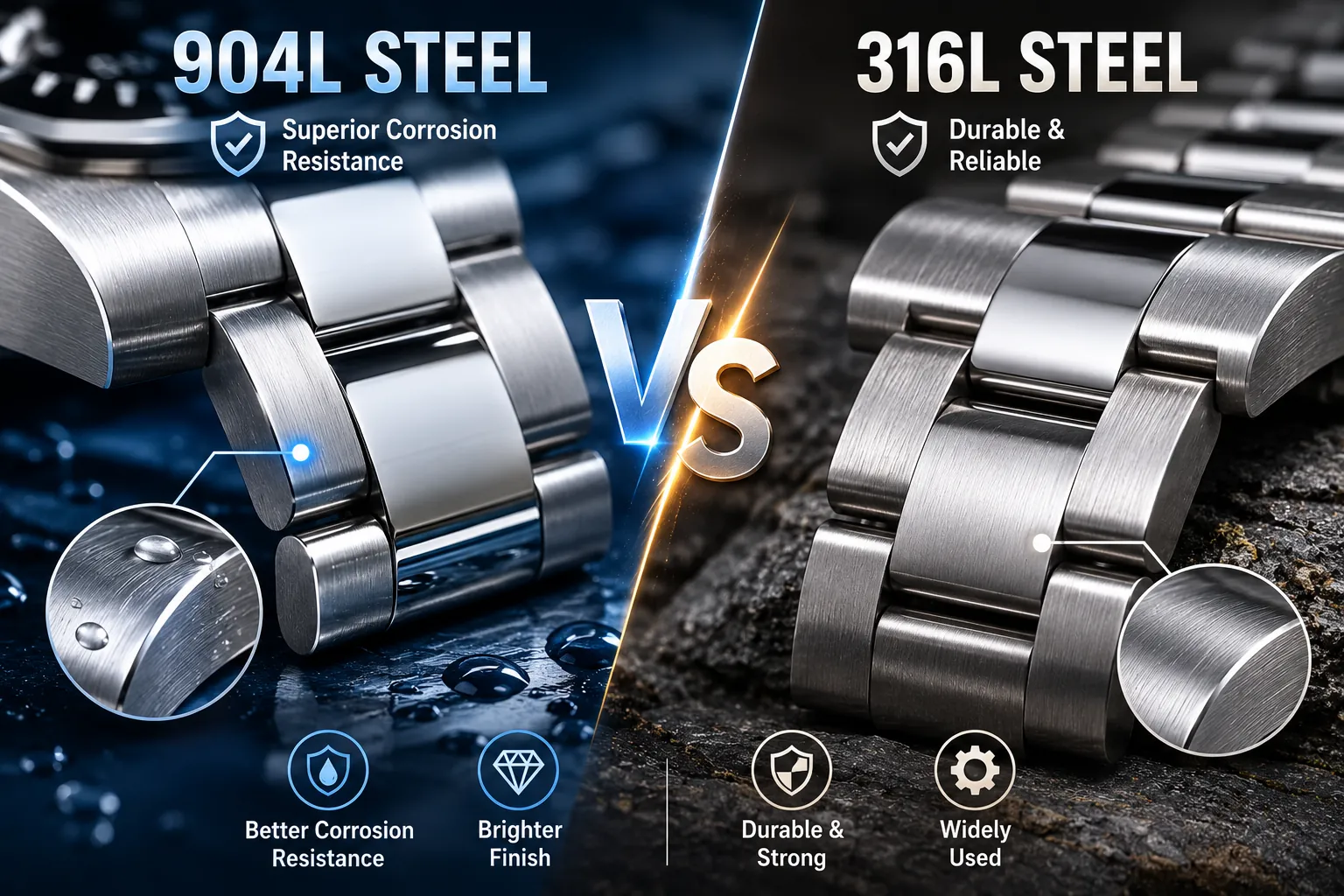
عند مناقشة الساعات الفاخرة، فإن المواد المستخدمة في تصنيعها تعتبر بنفس أهمية الحركة الداخلية. ومن بين المواد التي يتم النقاش حولها بشكل متكرر هي الفولاذ المقاوم للصدأ 904L و الفولاذ المقاوم للصدأ 316L. على الرغم من أن كلاهما متين للغاية ومقاوم للصدأ، إلا أن هناك اختلافات رئيسية تساعد في تفسير سبب اختيار بعض العلامات التجارية للساعات الفاخرة واحدة على الأخرى.
إذًا، أي الفولاذين هو الأفضل فعلاً للساعات؟ دعونا نلقي نظرة أقرب.
ما هو الفولاذ المقاوم للصدأ 316L؟
يعتبر الفولاذ المقاوم للصدأ 316L معيار الصناعة منذ فترة طويلة في صناعة الساعات. يتم استخدامه على نطاق واسع من قبل العديد من العلامات التجارية المرموقة بفضل توازنه الممتاز بين المتانة ومقاومة الصدأ والتكلفة المعقولة.
هذا النوع من الفولاذ يعمل بشكل استثنائي في الظروف اليومية. فهو يقاوم الرطوبة والعرق والتعرض البيئي بينما يحافظ على مظهر جذاب لسنوات. بالنسبة لمعظم عشاق الساعات، يوفر فولاذ 316L قوة وموثوقية أكثر من كافية للاستخدام اليومي.
مزايا فولاذ 316L
- مقاومة ممتازة للصدأ
- متين ومقاوم للخدوش
- سهل التشغيل والتلميع
- تكاليف تصنيع أكثر اقتصادية
- يستخدم على نطاق واسع في صناعة الساعات
ما هو الفولاذ المقاوم للصدأ 904L؟
يعتبر الفولاذ المقاوم للصدأ 904L مادة أكثر فخامة بسبب تركيبته الكيميائية المحسنة. يحتوي على كميات أعلى من الكروم والنيكل والموليبدينوم، مما يجعله أكثر مقاومة للصدأ من فولاذ 316L.
أصبحت رولكس مشهورة باستخدام فولاذ 904L في العديد من ساعاتها، مما ساعد في تأسيس سمعة هذه المادة داخل صناعة الساعات الفاخرة. اليوم، غالبًا ما يرتبط فولاذ 904L بالساعات الراقية بسبب بريقه المميز ومقاومته الفائقة للبيئات القاسية.
مزايا فولاذ 904L
- مقاومة استثنائية للصدأ
- مقاومة أكبر للتعرض للمياه المالحة
- تشطيب أكثر إشراقًا وفخامة
- متانة أعلى في الظروف القاسية
- مظهر وإحساس فاخر
المظهر: هل يمكنك رؤية الفرق؟
واحدة من أكثر الاختلافات وضوحًا بين المادتين هي تشطيبهما.
يميل فولاذ 904L إلى إنتاج سطح أكثر إشراقًا وانعكاسية بعد التلميع. وغالبًا ما يظهر بريقًا أغنى يرتبط به العديد من الجامعين مع الساعات الفاخرة.
يبدو فولاذ 316L أيضًا ممتازًا ولكنه عمومًا له مظهر أكثر نعومة قليلاً. بالنسبة للمراقبين العاديين، قد يكون الفرق طفيفًا، لكن عشاق الساعات ذوي الخبرة يمكنهم غالبًا تمييز بين التشطيبات.
المتانة والاستخدام اليومي
كلا المادتين متينتين للغاية ومناسبتان للاستخدام اليومي. ومع ذلك، يوفر فولاذ 904L ميزة عند التعرض لظروف قاسية بشكل خاص، بما في ذلك البيئات المالحة والرطوبة العالية.
بالنسبة للأفراد الذين يسافرون كثيرًا، أو يقضون وقتًا بالقرب من المحيط، أو ببساطة يرغبون في أعلى مستوى من مقاومة الصدأ المتاحة، يوفر فولاذ 904L راحة إضافية.
ومع ذلك، يبقى فولاذ 316L قادرًا تمامًا على التعامل مع الاستخدام اليومي العادي دون مشاكل.
لماذا تستخدم رولكس فولاذ 904L؟
لطالما ركزت رولكس على الموثوقية على المدى الطويل والبناء الفاخر. يسمح استخدام فولاذ 904L للعلامة التجارية بتحقيق كل من المتانة الاستثنائية والتشطيب البصري المميز.
بالإضافة إلى معايير التصنيع الدقيقة لرولكس، تساعد المادة في إنشاء ساعات تحافظ على مظهرها وأدائها لعقود. هذا الالتزام بالجودة هو أحد الأسباب التي تجعل ساعات رولكس لا تزال محط إعجاب الجامعين حول العالم.
هل فولاذ 904L دائمًا أفضل؟
ليس بالضرورة.
بينما يقدم فولاذ 904L مزايا معينة، يبقى فولاذ 316L مادة ممتازة موثوق بها من قبل العديد من الشركات المصنعة الرائدة للساعات. تصبح الاختلافات أكثر وضوحًا في مقاومة الصدأ على المدى الطويل وجودة التشطيب العامة بدلاً من القوة الأساسية.
بالنسبة لمعظم المستخدمين، توفر كلا المادتين أداءً ممتازًا. وغالبًا ما يعتمد الاختيار على التفضيل الشخصي والميزانية ومستوى الرقي المطلوب.
الحكم النهائي
إذا كنت تبحث عن أعلى مستوى من مقاومة الصدأ، وتشطيب أكثر إشراقًا، ومادة ترتبط عادة بصناعة الساعات الفاخرة، فولاذ 904L هو الخيار الأفضل.
إذا كنت ترغب في مادة مثبتة ومتينة وموثوقة للغاية تعمل بشكل استثنائي في المواقف اليومية، فولاذ 316L يبقى خيارًا ممتازًا.
في النهاية، لقد حصلت كلا المادتين على مكانتها في صناعة الساعات الحديثة. سواء كنت تفضل جاذبية فولاذ 904L الفاخرة أو تعددية فولاذ 316L الموثوقة، فأنت تستثمر في مادة قادرة على تقديم سنوات من الأداء الموثوق والأناقة الخالدة.
