Introduction: The Journey of an Iconic Watch Brand
For more than a century, Rolex has represented precision, durability, and timeless design in the world of luxury watches. From early waterproof innovations to modern mechanical movements, Rolex has continuously pushed the boundaries of watchmaking while maintaining its recognizable identity.
The evolution of Rolex watches is not only a story about technical improvements but also about how design, engineering, and innovation have shaped some of the most iconic timepieces ever created.
The Beginning of Rolex: A Vision for Precision and Reliability
Founded in 1905, Rolex began with a clear goal: creating watches that combined accuracy with everyday reliability. At a time when pocket watches were still more common, Rolex focused on developing wristwatches that could deliver the same level of precision.
One of Rolex’s earliest achievements was receiving the Swiss Certificate of Chronometric Precision in 1910, proving that wristwatches could achieve exceptional accuracy.
This focus on precision became the foundation of the Rolex philosophy:
A Rolex should not only look luxurious — it should perform reliably in real-world conditions.
The Birth of the Oyster Case: A Revolution in Watch Design
One of the most important milestones in Rolex history came in 1926 with the introduction of the Oyster case.
The Oyster was one of the world’s first waterproof wristwatch cases, featuring a screw-down bezel, case back, and winding crown. This innovation protected the movement from dust and moisture while improving long-term durability.
The design concept remains one of the most recognizable features of modern Rolex watches.
The Oyster case helped establish Rolex as a brand associated with:
- Water resistance
- Strong construction
- Everyday reliability
- Professional performance
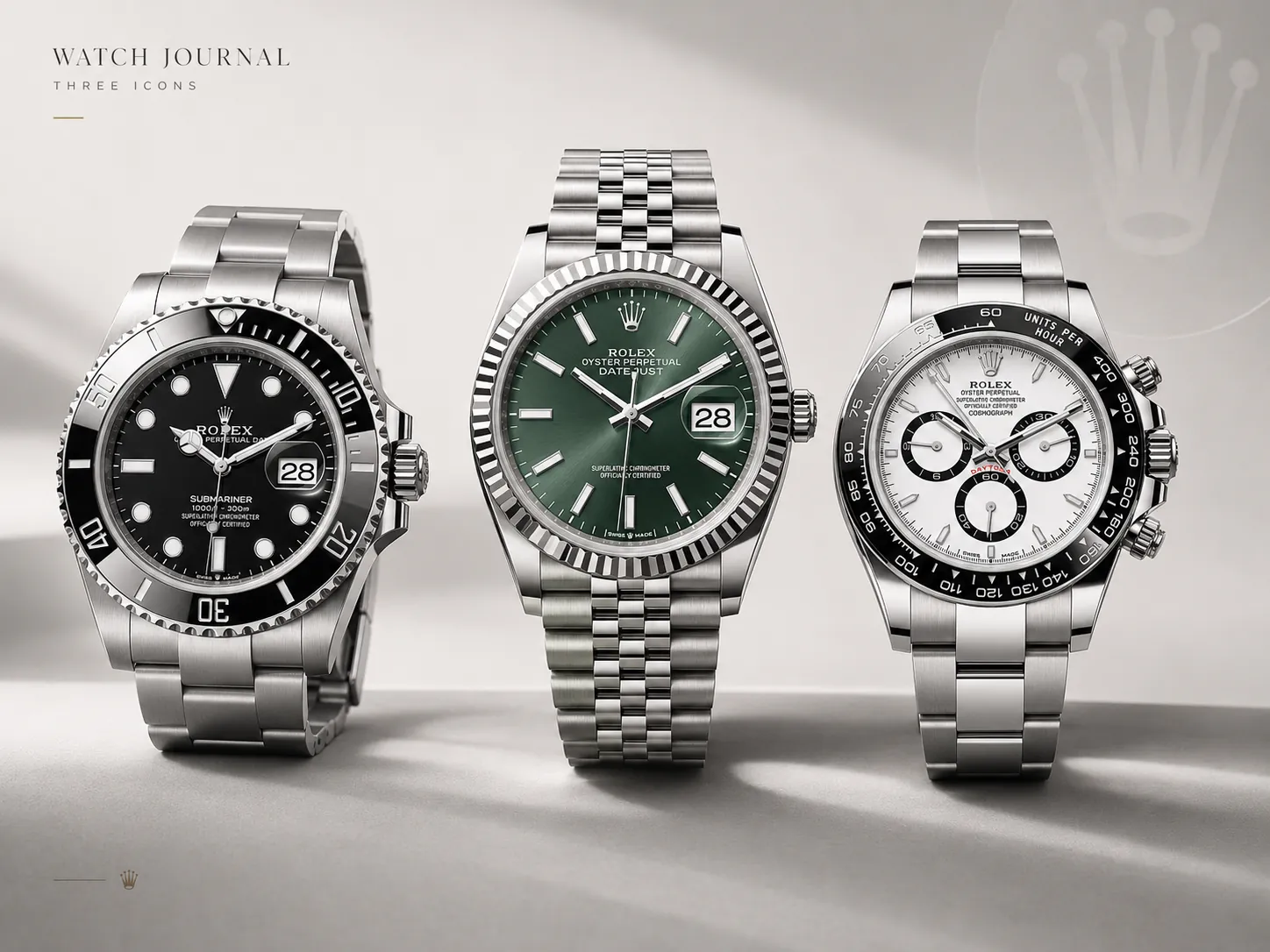
This technology later became the foundation for famous collections such as the Rolex Submariner and Rolex Datejust.
Rolex and the Evolution of Automatic Movements
Mechanical movement development has always been at the heart of Rolex innovation.
In 1931, Rolex introduced the Perpetual rotor system, an automatic winding mechanism that allowed the watch to generate power through wrist movement.
This technology became a major step forward because it improved convenience and reliability for everyday wear.
Modern Rolex movements continue this tradition with improvements in:
- Accuracy
- Power reserve
- Shock resistance
- Energy efficiency
- Long-term durability
Today, Rolex develops and manufactures many of its own movements, focusing on consistent performance rather than simply adding unnecessary complexity.
Design Evolution: How Rolex Created Timeless Styles
One of Rolex’s greatest achievements is its ability to evolve while keeping its iconic design language.
Many Rolex models introduced decades ago still maintain their original character today.
Rolex Submariner: The Professional Dive Watch
Introduced in 1953, the Submariner became one of the most famous dive watches in history.
Its recognizable features include:
- Rotating dive bezel
- Strong Oyster case
- High-visibility markers
- Professional underwater capability
Over the years, the Submariner has evolved through improved materials, ceramic bezels, and updated movements while keeping its classic appearance.
Rolex Daytona: The Racing-Inspired Chronograph
The Rolex Cosmograph Daytona represents Rolex’s connection with motorsports.
Originally designed for racing enthusiasts, the Daytona became famous for its precision timing functions and sporty appearance.
Modern Daytona models feature advanced chronograph movements, premium materials, and highly refined finishing, making it one of the most desirable Rolex watches among collectors.
Rolex Datejust: The Definition of Classic Luxury
Introduced in 1945, the Datejust became the first self-winding wristwatch with a date display visible through an aperture on the dial.
Its balanced design made it suitable for almost any occasion — from business environments to formal events.
The Datejust represents one of Rolex’s strongest design philosophies:
A watch should remain elegant even as technology continues to evolve.
The Innovation of Rolex Materials
Over the years, Rolex has invested heavily in developing advanced materials to improve durability and appearance.
Oystersteel
Rolex uses a special stainless steel known as Oystersteel, valued for its corrosion resistance and ability to maintain a polished finish.
Cerachrom Ceramic Bezel
Modern Rolex sports watches often feature ceramic bezels designed to resist scratches, fading, and daily wear.
Precious Metals
Rolex continues to produce watches using materials such as:
- Yellow gold
- White gold
- Everose gold
The combination of traditional craftsmanship and modern material technology helps Rolex maintain its reputation for quality.
Modern Rolex: Combining Tradition with Innovation
Today’s Rolex watches represent a balance between heritage and modern engineering.
While the overall appearance of many models remains familiar, improvements continue behind the scenes:
- More efficient movements
- Enhanced precision standards
- Improved materials
- Better durability
- Advanced manufacturing techniques
Rolex has shown that innovation does not always require dramatic changes. Sometimes, improving small details over decades creates the strongest results.
Why Rolex Watches Continue to Influence the Watch Industry
The success of Rolex comes from more than just luxury branding. It comes from decades of consistent development in:
- Mechanical engineering
- Material science
- Functional design
- Quality control
- User experience
Whether someone appreciates Rolex for its history, craftsmanship, or iconic appearance, the brand remains one of the most influential names in modern watchmaking.
Final Thoughts: The Future of Rolex Evolution
The evolution of Rolex watches is a story of continuous improvement. From the first waterproof wristwatch to today’s advanced mechanical timepieces, Rolex has always focused on reliability, precision, and timeless design.
The future of Rolex will likely continue following the same philosophy:
Respect tradition, improve technology, and create watches designed to last for generations.
