
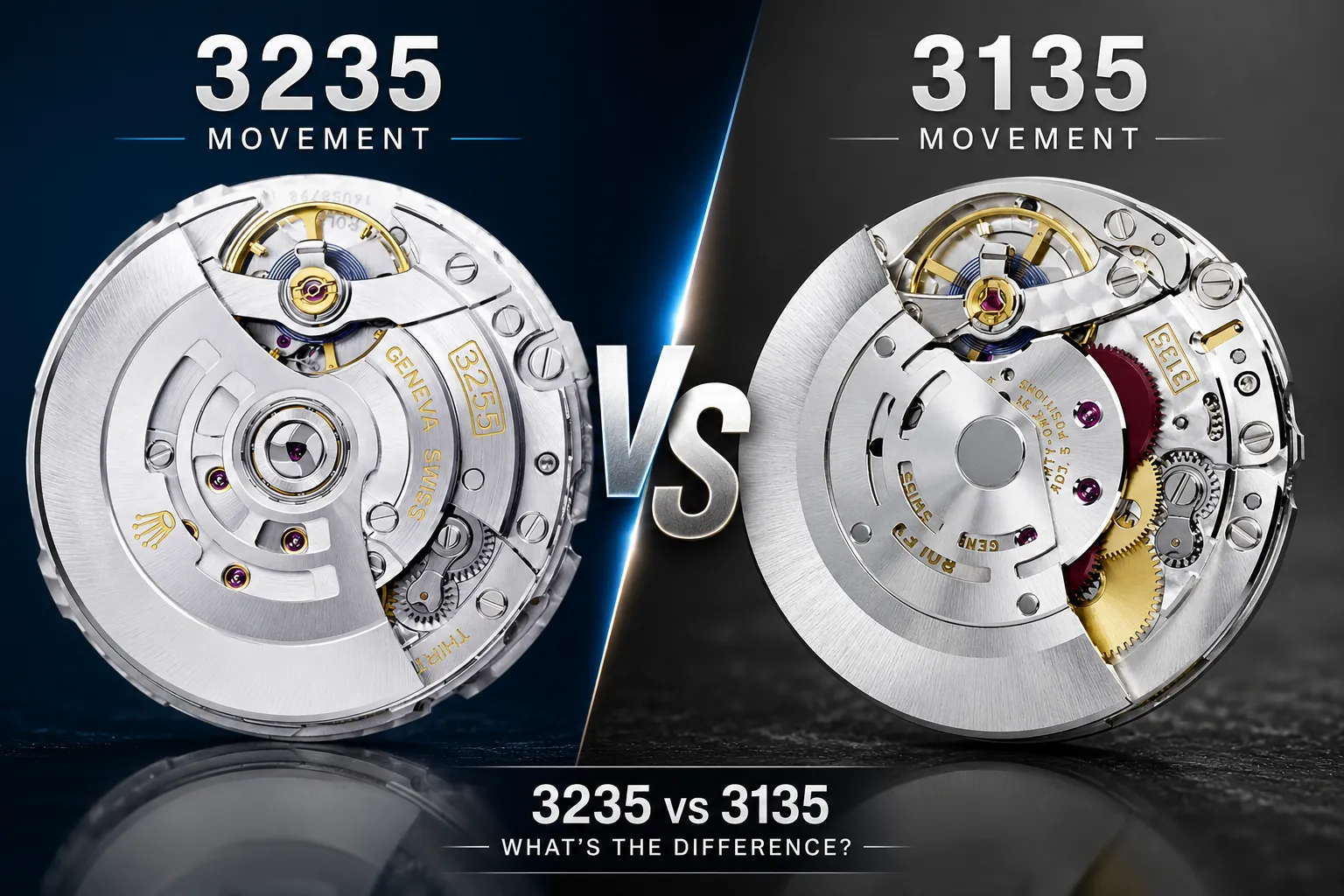
Rolex hat seinen Ruf auf Präzision, Zuverlässigkeit und kontinuierlicher Innovation aufgebaut. Unter seinen angesehensten automatischen Uhrwerken stechen das Kaliber 3135 und das Kaliber 3235 als zwei der einflussreichsten Mechanismen in der Geschichte der Marke hervor. Während beide für außergewöhnliche Leistung bekannt sind, bringt das neuere 3235-Uhrwerk mehrere wichtige Verbesserungen mit sich, die Effizienz, Gangreserve und Gesamtgenauigkeit erhöhen.
Wenn Sie Rolex-Uhren vergleichen, die mit einem der beiden Uhrwerke ausgestattet sind, kann das Verständnis der Unterschiede Ihnen helfen, die Vorzüge jedes Kalibers zu schätzen.
Das Erbe des Rolex 3135
Das Rolex 3135 wurde 1988 eingeführt und entwickelte sich schnell zu einem der erfolgreichsten automatischen Uhrwerke, die je produziert wurden. Es trieb über Jahrzehnte zahlreiche ikonische Rolex-Modelle an und erwarb sich einen Ruf für herausragende Langlebigkeit und Zuverlässigkeit.
Uhrenliebhaber loben oft das 3135 für seine robuste Bauweise und die einfache Wartung. Selbst nach Jahren des täglichen Tragens zeigen viele Exemplare eine bemerkenswerte Genauigkeit.
Hauptmerkmale des 3135
- 1988 eingeführt
- Automatisches Selbstaufzugswerk
- Ungefähr 48 Stunden Gangreserve
- Bewährte Langzeitzuverlässigkeit
- In vielen klassischen Rolex-Modellen verwendet
Für viele Sammler stellt das 3135 den goldenen Standard traditioneller Rolex-Technik dar.
Die Ankunft des Rolex 3235
Im Jahr 2015 stellte Rolex das Kaliber 3235 als Teil einer neuen Generation von Uhrwerken vor, die darauf ausgelegt sind, Leistung und Effizienz zu verbessern. Während die Zuverlässigkeit, für die Rolex bekannt ist, beibehalten wird, integriert das 3235 zahlreiche technische Fortschritte.
Rolex hat erklärt, dass das 3235 über 90 % neue Komponenten im Vergleich zu früheren Generationen enthält, was es zu einem der bedeutendsten Bewegungs-Upgrades in der Geschichte der Marke macht.
Hauptmerkmale des 3235
- 2015 eingeführt
- Ungefähr 70 Stunden Gangreserve
- Verbesserte Energieeffizienz
- Erhöhte Stoßfestigkeit
- Technologie des neuen Fluchtmechanismus
- Größere Gesamtpräzision und Stabilität
Vergleich der Gangreserve
Einer der auffälligsten Unterschiede zwischen den beiden Uhrwerken ist die Gangreserve.
Das 3135 bietet ungefähr 48 Stunden Gangreserve, was mehr als ausreichend für den täglichen Gebrauch ist.
Das 3235 erweitert dies auf ungefähr 70 Stunden, sodass die Uhr fast drei Tage lang ohne Tragen weiterläuft. Diese Verbesserung ist besonders nützlich für Sammler, die im Laufe der Woche zwischen mehreren Uhren wechseln.
Gewinner: 3235
Die längere Gangreserve bietet mehr Komfort und Flexibilität.
Effizienz und Technologie
Das 3235 verfügt über das fortschrittliche Chronergy-Hemmungssystem von Rolex, ein neu gestaltetes System, das die Energieeffizienz verbessert und gleichzeitig die Zuverlässigkeit aufrechterhält.
Diese Innovation hilft dem Uhrwerk, Energie effektiver zu nutzen, was direkt zur erhöhten Gangreserve beiträgt. In Kombination mit anderen internen Verbesserungen bietet das 3235 eine stärkere Gesamtleistung, ohne die Langlebigkeit zu opfern.
Das 3135 bleibt äußerst zuverlässig, aber es fehlen viele der modernen Effizienzverbesserungen, die im neueren Kaliber zu finden sind.
Gewinner: 3235
Die neuere Technologie bietet messbare Verbesserungen in der täglichen Leistung.
Zuverlässigkeit und Haltbarkeit
Beide Uhrwerke sind außergewöhnlich zuverlässig und für jahrelangen regelmäßigen Gebrauch gebaut.
Das 3135 hat sich bereits über mehrere Jahrzehnte bewährt und bleibt eines der vertrauenswürdigsten automatischen Uhrwerke, die je produziert wurden.
Das 3235 setzt diese Tradition fort und bietet gleichzeitig eine verbesserte Widerstandsfähigkeit gegen Stöße, magnetische Einflüsse und alltägliche Umweltbedingungen.
Gewinner: Unentschieden
Das 3135 gewinnt aufgrund seiner langfristigen Erfolgsbilanz, während das 3235 von modernen Ingenieureingriffen profitiert.
Welches Uhrwerk sollten Sie wählen?
Wenn Sie klassische Rolex-Technik und bewährte Zuverlässigkeit schätzen, bleibt das 3135 eine hervorragende Wahl. Es hat sich seinen Platz unter den respektiertesten Uhrwerken der modernen Uhrenmacherei verdient.
Wenn Sie die neueste Technologie, eine längere Gangreserve und verbesserte Effizienz bevorzugen, stellt das 3235 die nächste Evolution der Rolex-Leistung dar.
Für die meisten Käufer bietet das 3235 dank seines verbesserten Designs und seiner erweiterten Funktionalität das stärkere Gesamtpaket.
Fazit
Das Rolex 3135 und 3235 sind beide außergewöhnliche Uhrwerke, die das Engagement der Marke für Qualität und Präzision widerspiegeln. Das 3135 hat sich als Maßstab für Zuverlässigkeit etabliert, während das 3235 auf diesem Fundament mit bedeutenden technologischen Verbesserungen aufbaut.
Letztendlich ist keines der beiden Uhrwerke eine schlechte Wahl. Ob Sie das bewährte Erbe des 3135 oder die fortschrittliche Technik des 3235 bevorzugen, beide Kaliber bieten die Leistung, Haltbarkeit und Handwerkskunst, die Rolex zu einem der respektiertesten Namen in der Uhrenmacherei gemacht haben.
