
Introduction : L'évolution des mouvements Rolex Daytona
La Rolex Daytona est l'une des montres chronographes les plus célèbres au monde. Bien que son design emblématique attire les collectionneurs, la véritable innovation se trouve à l'intérieur du boîtier — le mouvement.
Depuis plus de 20 ans, le Calibre 4130 de Rolex est considéré comme l'un des mouvements chronographes automatiques les plus fiables jamais créés. Avec l'introduction du Calibre 4131, Rolex a poursuivi cette tradition en améliorant la finition, l'efficacité et la technologie moderne.
Alors, quelles sont les véritables différences entre les Rolex 4130 et 4131 ?
Rolex Calibre 4130 : Le mouvement légendaire de la Daytona
Introduit en 2000, le Calibre 4130 a marqué une étape majeure pour Rolex. C'était le premier mouvement chronographe automatique entièrement conçu en interne, développé spécifiquement pour la collection Daytona.
Avant le 4130, Rolex utilisait des mouvements chronographes externes modifiés. L'arrivée de ce mouvement a démontré la capacité de Rolex à créer un chronographe haute performance entièrement issu de son propre ingénierie.
Les caractéristiques clés incluent :
- Design de chronographe intégré
- Mécanisme à roue à colonnes
- Système d'embrayage vertical
- Spiral Parachrom
- Réserve de marche d'environ 72 heures
- Précision certifiée COSC
Le 4130 est devenu célèbre pour sa fiabilité, son fonctionnement fluide et sa durabilité à long terme.
Rolex Calibre 4131 : Une mise à niveau de nouvelle génération
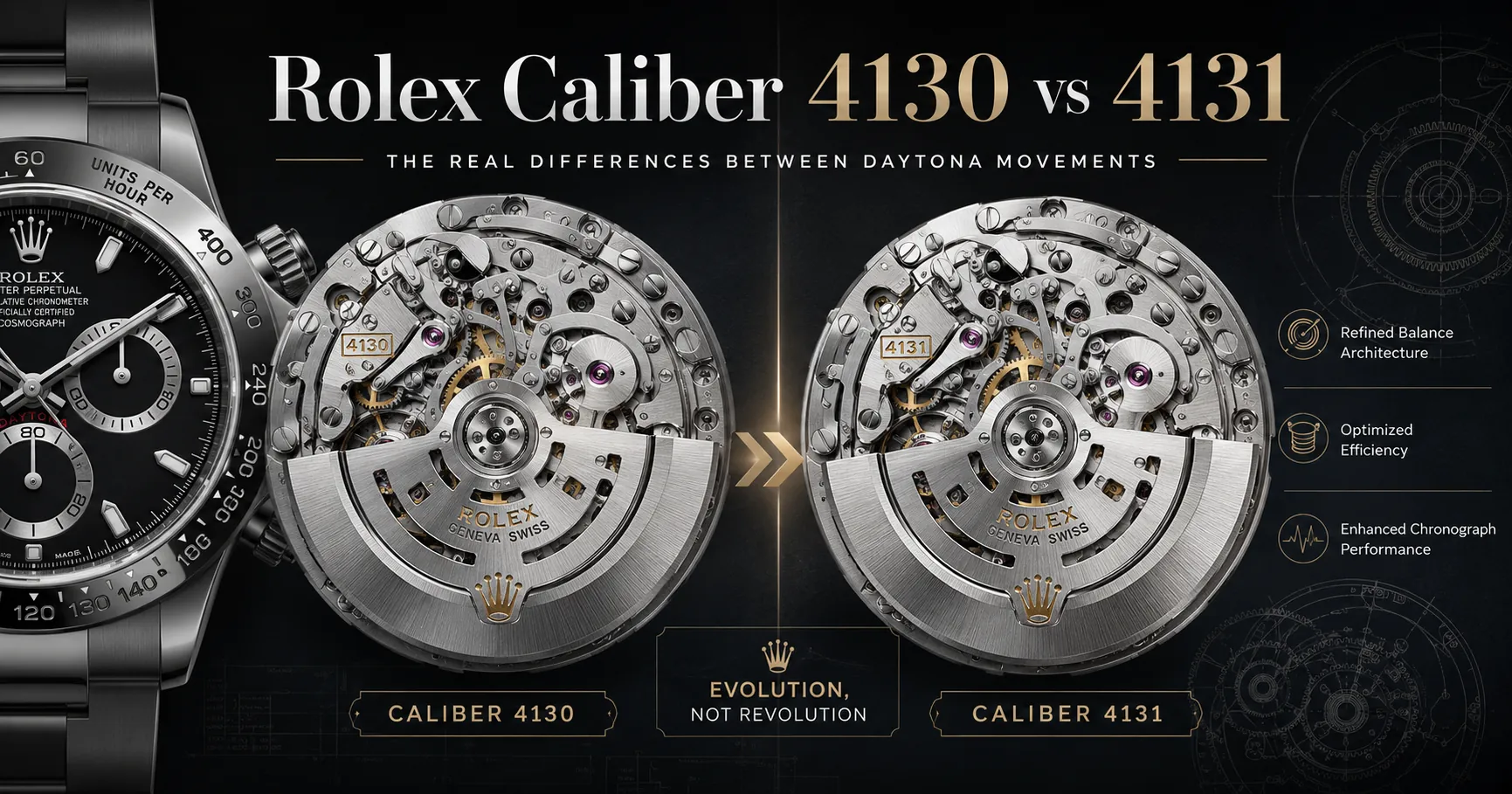
Le Rolex Calibre 4131 n'est pas une refonte complète mais une évolution de la plateforme réussie 4130.
Rolex s'est concentré sur l'amélioration du raffinement tout en conservant la structure de chronographe éprouvée.
Le 4131 maintient :
- Système de remontage automatique
- Contrôle par roue à colonnes
- Technologie d'embrayage vertical
- Environ 72 heures de réserve de marche
Cependant, Rolex a introduit des améliorations dans la décoration du mouvement, l'efficacité et la finition.
Le nouveau calibre reflète la philosophie de Rolex consistant à apporter de petites améliorations qui renforcent les performances globales.
Différences clés entre Rolex 4130 et 4131
1. Finition du mouvement
La plus grande différence visible est la décoration améliorée du 4131.
Comparé au 4130, le 4131 présente :
- Ponts plus raffinés
- Finition de surface améliorée
- Décoration Côtes de Genève de Rolex
- Détails visuels améliorés
Bien que le mouvement soit généralement caché, Rolex a accordé plus d'attention à l'esthétique dans la nouvelle génération.
2. Améliorations techniques
Les deux calibres utilisent la technologie de chronographe éprouvée de Rolex :
Roue à colonnes
Offre un contrôle précis des fonctions du chronographe et un fonctionnement fluide.
Embrayage vertical
Aide à réduire le saut des aiguilles lors du démarrage de la fonction chronomètre.
Le 4131 bénéficie de petites améliorations techniques qui renforcent l'efficacité et la fiabilité.
3. Précision et fiabilité
Les deux mouvements sont dotés du spiral Parachrom de Rolex, conçu pour améliorer la résistance contre :
- Les champs magnétiques
- Les variations de température
- Les chocs
Les deux calibres sont certifiés comme Superlatifs Chronomètres, offrant une excellente précision pour un usage quotidien.
La différence n'est pas un changement dramatique de performance, mais une évolution des normes déjà élevées de Rolex.
Comparaison Rolex 4130 vs 4131
| Caractéristique | Rolex 4130 | Rolex 4131 |
|---|---|---|
| Année de sortie | 2000 | 2023 |
| Collection | Daytona | Nouvelle Génération Daytona |
| Type de mouvement | Chronographe automatique | Chronographe automatique |
| Réserve de marche | Environ 72 heures | Environ 72 heures |
| Système de chronographe | Roue à colonnes + Embrayage vertical | Roue à colonnes + Embrayage vertical |
| Spiral | Parachrom | Parachrom |
| Amélioration principale | Fiabilité éprouvée | Finition et raffinement améliorés |
Lequel est le meilleur ?
La réponse dépend de ce que les collectionneurs apprécient.
Le Rolex 4130 reste un mouvement légendaire en raison de son histoire éprouvée et de sa fiabilité exceptionnelle. Il représente l'une des réalisations mécaniques les plus réussies de Rolex.
Le Rolex 4131 représente la prochaine étape du développement de la Daytona, offrant une finition améliorée, une technologie mise à jour et une expérience plus raffinée.
Pensées finales : Évolution, pas révolution
La différence entre le Calibre 4130 et le 4131 de Rolex montre l'approche de Rolex en matière d'horlogerie — améliorer un design réussi plutôt que de le remplacer complètement.
Le 4130 a créé la base des performances modernes de la Daytona, tandis que le 4131 poursuit cet héritage avec une ingénierie mise à jour et des détails raffinés.
Les deux mouvements représentent la même philosophie Rolex :
Précision, fiabilité et innovation continue.
