Når folk snakker om sveitsiske klokker, brukes ofte begrepet “premium kvalitet”—men sjelden forklares det i detalj. Hva er det som faktisk gjør en klokke i samsvar med sveitsiske standarder? Er det urverket, materialene, finishen, eller noe mer usynlig?
Sannheten er at sveitsisk klokkeproduksjon ikke defineres av en enkelt faktor. Det er en kombinasjon av ingeniørpresisjon, håndverk, materialvitenskap og streng kvalitetskontroll som sammen skaper langsiktig pålitelighet og ytelse.
La oss bryte ned hva som virkelig definerer premium sveitsiske klokke-standarder.
1. Presisjonsingeniørkunst: Hjertet av sveitsisk klokkeproduksjon
Kjernen i hver sveitsisk klokke er dens urverk—også kjent som “kaliber.”
Sveitsiske urverk er designet for å levere:
- Høy nøyaktighet over lange perioder
- Stabil ytelse under forskjellige forhold
- Sømløs mekanisk drift
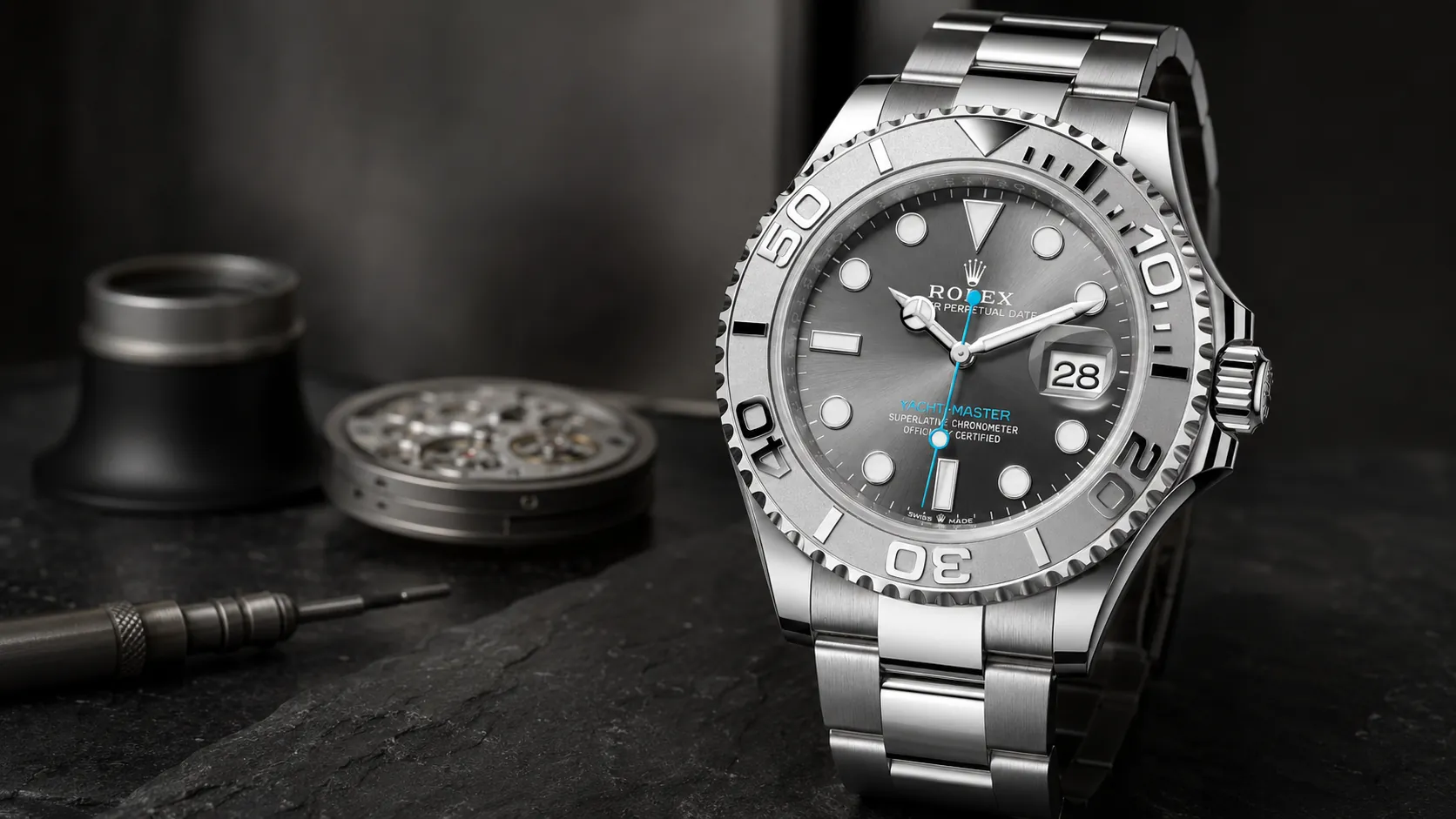
Luksusmerker som Rolex utvikler interne automatiske urverk som testes for presisjon langt utover standard industrikrav.
I motsetning til masseproduserte kvartsur, krever mekaniske urverk hundrevis av små komponenter som arbeider i perfekt synkronisering. Selv en mikroskopisk justering kan påvirke tidsmålingens ytelse.
Dette er grunnen til at sveitsiske standarder prioriterer ingeniørmessig konsistens fremfor kortsiktig produksjonshastighet.
2. Materialvalg: Bygget for lang levetid, ikke bare utseende
Premium sveitsiske klokker defineres ikke bare av utseendet—materialene velges for holdbarhet, motstand og langvarig aldringsytelse.
Vanlige materialer av høy kvalitet inkluderer:
- Oystersteel (904L rustfritt stål) – svært korrosjonsbestandig og polert til en dyp glans
- 18K gulllegeringer – designet for stabilitet og langvarig fargebevaring
- Cerachrom keramiske bezel – ripebestandige og UV-stabile
- Safirkrystallglass – ekstremt hardt og svært ripebestandig
Fokuset er ikke bare på luksuriøst utseende, men hvordan materialet oppfører seg etter mange års bruk.
En ekte klokke av sveitsisk standard bør fortsatt se raffinert ut selv etter daglig bruk i mange år.
3. Finish: Der ekte håndverk blir synlig
En av de mest oversette aspektene ved sveitsisk kvalitet er finish.
Selv om to klokker ser like ut på avstand, blir forskjellen tydelig når de undersøkes nøye.
Premium finish inkluderer:
- Polerte og børstede overflater i perfekt balanse
- Skarpe, veldefinerte kanter uten grove overganger
- Jevn urskiveutskrift med mikroskopisk presisjon
- Sømløs håndjustering og konsekvent avstand
Sveitsiske urmakere investerer tungt i håndfinish-teknikker fordi maskiner alene ikke kan oppnå perfekt estetisk raffinement.
Dette er der luksus blir synlig—ikke bare funksjonell.
4. Teststandarder: Mer enn bare tidsnøyaktighet
Sveitsiske klokker gjennomgår omfattende testing før de når markedet.
Disse testene inkluderer ofte:
- Trykkmotstand (vanntetting)
- Støtmotstand
- Temperaturvariasjonstesting
- Langsiktig bevegelsesstabilitet
- Magnetisk motstandsjekk
For eksempel tester luksusmerker som Rolex berømt klokker under ekstreme forhold som simulerer virkelighetsbruk over år.
Dette sikrer at en klokke ikke bare er nøyaktig på dag én—men forblir pålitelig under virkelige stressforhold.
5. Den menneskelige faktoren: Dyktig håndverk betyr fortsatt noe
Til tross for moderne teknologi, er sveitsisk klokkeproduksjon fortsatt sterkt avhengig av menneskelig ekspertise.
Erfarne urmakere:
- Setter sammen mikroskopiske bevegelseskomponenter
- Utfører fine justeringer for tidsnøyaktighet
- Inspiser finishkvalitet under forstørrelse
- Kalibrerer ytelse på tvers av flere posisjoner
Denne blandingen av menneskelig ferdighet og industriell presisjon er en av hovedgrunnene til at sveitsiske klokker opprettholder sitt rykte globalt.
Maskiner sikrer konsistens. Mennesker sikrer perfeksjon.
6. Så hva definerer egentlig “premium kvalitet”?
En ekte premium sveitsisk klokke defineres ikke av én funksjon.
Det er kombinasjonen av:
- Presisjonskonstruert urverk
- Nøye utvalgte holdbare materialer
- Høyfinish og oppmerksomhet på detaljer
- Strenge flertrinnstester
- Dyktig menneskelig håndverk
Når alle disse elementene kommer sammen, er resultatet ikke bare en klokke—det er et langsiktig mekanisk instrument designet for pålitelighet, estetikk og arv.
Avsluttende tanker
Sveitsiske klokke-standarder handler ikke om markedsføringsetiketter—de handler om konsekvent utførelse på hvert produksjonstrinn.
Enten du utforsker inngangsnivå luksus eller høykvalitets klokker, hjelper forståelsen av disse grunnleggende prinsippene deg med å vurdere kvalitet langt utover bare merkenavn.
Og i verden av mekaniske klokker er ekte premium kvalitet alltid noe du kan føle—ikke bare se.
