
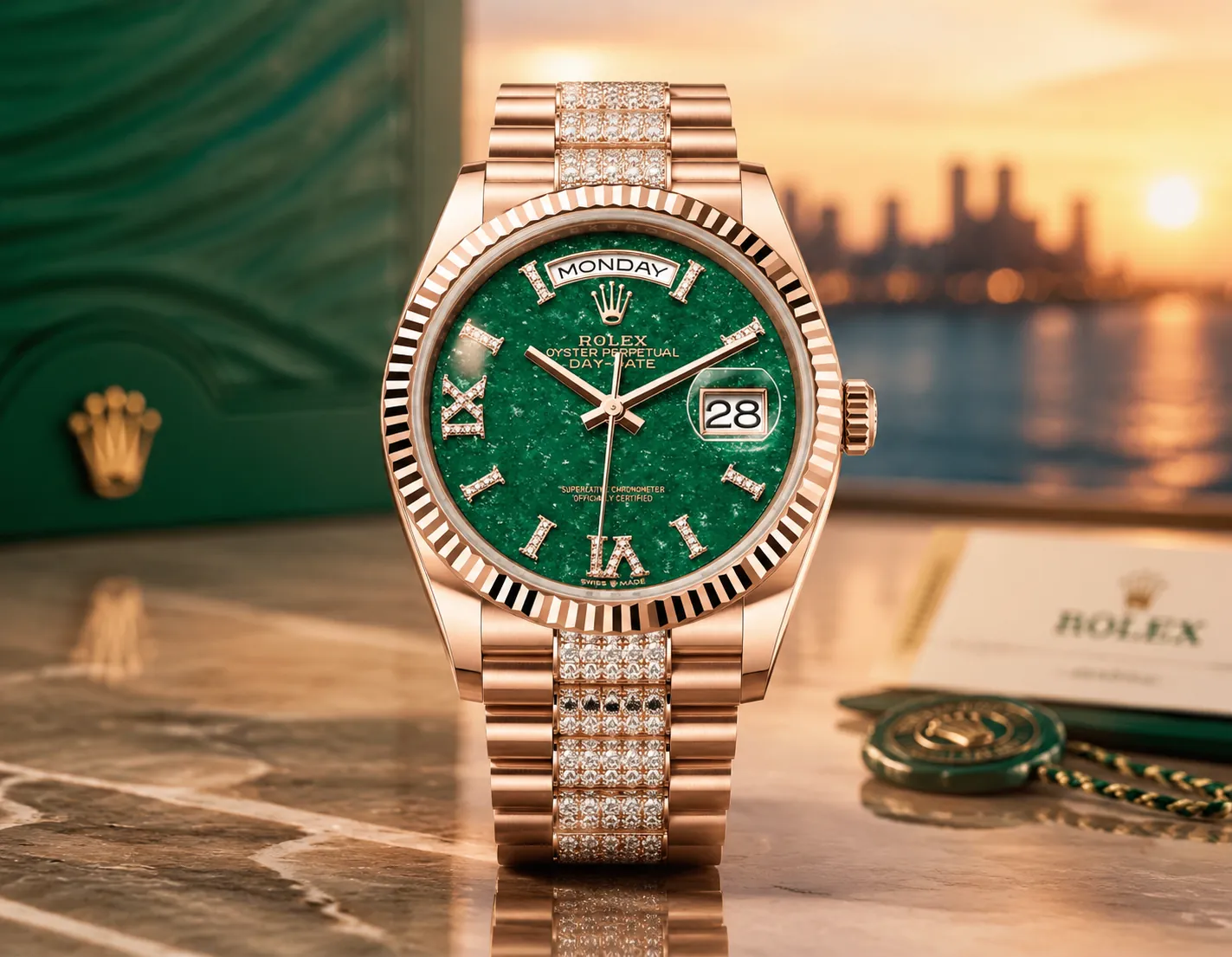
När människor tänker på Rolex fokuserar de ofta på design, arv och prestige. Men en av de viktigaste anledningarna till att Rolex utmärker sig i världen av lyxklockor är dess materialteknik.
Rolex använder inte bara standardmaterial för klockor. Istället utvecklar och förfinar de sina egna legeringar och ytbehandlingstekniker för att säkerställa långvarig hållbarhet, visuell konsistens och en premiumkänsla på handleden.
I den här artikeln kommer vi att bryta ner de tre viktigaste materialkategorierna som används i Rolex-klockor: stål, keramik och guldbeläggning.
Rolex Stål: Förklaring av Oystersteel
Rolex använder ett proprietärt rostfritt stål som kallas Oystersteel, en mycket raffinerad version av 904L-stål.
Till skillnad från standard 316L rostfritt stål som används i de flesta klockor, är Oystersteel designat för överlägsen prestanda i krävande miljöer.
Nyckelkarakteristika:
- Exceptionell motståndskraft mot korrosion och rost
- Högre poleringskvalitet med en ljusare finish
- Stark hållbarhet i saltvatten och fuktighet
- Långsiktig ytestabilitet
En av anledningarna till att Rolex-klockor känns så solida är densiteten och ytbehandlingskvaliteten hos detta stål. Det är inte bara starkt—det är också designat för att behålla sin visuella dragningskraft över tid.
👉 Enkelt uttryckt: Oystersteel är byggt för att se nytt ut i åratal, även vid daglig användning.
Rolex Keramik: Cerachrom Bezel-teknologi
En annan stor innovation från Rolex är Cerachrom, ett högteknologiskt keramiskt material som används i många moderna bezel.
Detta material utvecklades för att lösa ett vanligt problem i traditionella klockbezel: blekning och repor över tid.
Varför Cerachrom utmärker sig:
- Nästan repfri yta
- UV-beständig färgstabilitet
- Motståndskraftig mot blekning och miljöskador
- Högt polerad, premiumfinish
Rolex använder också avancerade lasertekniker för att gravera och fylla bezelmarkeringarna med material som platina eller guld, vilket säkerställer både hållbarhet och lyxigt utseende.
👉 Detta innebär att bezel behåller sitt skarpa utseende även efter år av exponering för solljus och daglig användning.
Rolex Guldbeläggning: Mer än bara utseende
Guld har alltid varit en nyckelkomponent i Rolex lyxidentitet. Men Rolex gör mer än att bara applicera guld—de kontrollerar hela produktionsprocessen.
Rolex producerar till och med sina egna guldlegeringar internt, vilket säkerställer konsekvens i färg och kvalitet.
Huvudtyper av Rolex-guld:
- Gult Guld – klassisk och traditionell lyxlook
- Everose Guld – Rolex egen roséguldlegering, designad för att motstå blekning
- Vitt Guld – subtil, elegant och nedtonad lyx
Varför Rolex-guld är annorlunda:
- Designat för långsiktig färgstabilitet
- Konstruerat för att motstå blekning över tid
- Noggrant polerat för maximal glans och djup
👉 Resultatet är en guldbeläggning som känns modern, raffinerad och mycket hållbar.
Varför Rolex-material är viktiga
Rolex-material väljs inte bara för utseendet—de är konstruerade för prestanda och lång livslängd.
Detta är varför Rolex fokuserar så mycket på:
- Korrosionsbeständighet
- Repbeständighet
- Långsiktig visuell stabilitet
- Konsekvent lyxkänsla över tid
Varje material spelar en roll i att säkerställa att en Rolex-klocka inte bara ser bra ut på dag ett—utan fortsätter att prestera och imponera i årtionden.
Avslutande tankar
Stål, keramik och guld är mer än bara material i Rolex-klockor—de är grunden för varumärkets rykte.
- Oystersteel ger styrka och hållbarhet
- Cerachrom säkerställer långvarig visuell perfektion
- Rolex-guld tillför raffinerad lyx och prestige
Tillsammans skapar de en klocka som är designad inte bara för att bäras—utan för att hålla i längden.
